New Jersey Tech, Business, & Creative Resources

New Jersey’s Power Play: Demanding Accountability from AI Data Centers

The rapid ascent of artificial intelligence is rewriting the playbook for regional infrastructure, and nowhere is the friction more visible than in New Jersey. As data centers—the physical engines powering the AI revolution—proliferate across the state, they bring with them an unprecedented demand for electricity. For too long, the cost of this has been socialized, with New Jersey residents and small businesses footing the bill through climbing utility rates.
That dynamic is now facing a definitive challenge. Governor Mikie Sherrill has introduced a rigorous policy framework designed to ensure that the massive energy consumption of these facilities is borne by the companies themselves, rather than the average ratepayer.
The Hidden Cost of the AI Boom
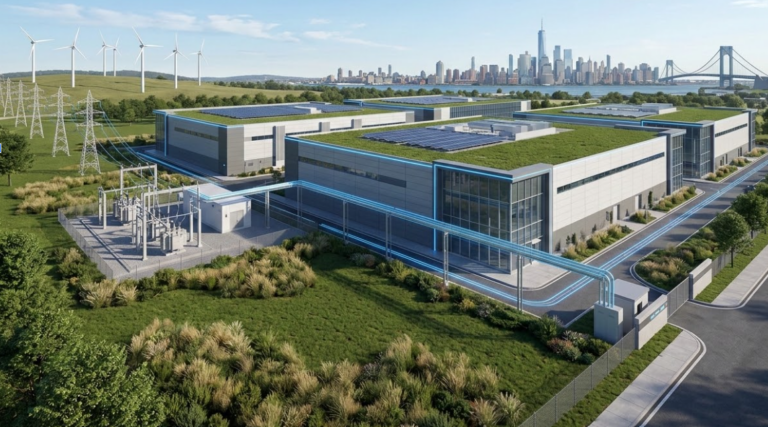
The technical requirements of AI are immense. A single large-scale AI data center can consume as much electricity as 100,000 households. As the state moves toward an increasingly electrified economy, these “large loads” are straining the regional power grid.
Recent discussions from stakeholders, including labor and business leadership, highlight a critical shift in the conversation: the urgent need to decouple industrial growth from residential cost increases. With over 80 data centers currently operating in New Jersey, the administration’s strategy focuses on ensuring that utility cost recovery is not automatically shifted to the general public.
A New Regulatory Framework
Governor Sherrill’s proposed guardrails represent a move toward fiscal and energy accountability. The administration’s strategy focuses on four core pillars:
- Cost Responsibility: Mandating that data center operators contract directly for their own power generation rather than relying on the general grid.
- Infrastructure Funding: Requiring developers to fund the specific grid upgrades necessitated by their facility’s energy requirements.
- Transparency: Implementing standardized reporting protocols that mandate public disclosure of energy and water consumption every six months.
- Community Benefits: Developing statewide standards for agreements to address local impacts, including noise, light, and pollution, while ensuring meaningful local investment.
The Road Ahead
The push for “grid independence” for these facilities is not merely about balancing budgets; it is about ensuring the resilience of New Jersey’s energy future. By requiring private entities to internalize the costs of their operations, the state aims to protect the affordability of power for its citizens and businesses.
As the state navigates the intersection of technological advancement and infrastructure security, the success of these policies will be a bellwether for how other states manage the industrial-scale demands of the AI era. For New Jersey, the goal is clear: to foster innovation without sacrificing the stability of its power grid or the wallets of its residents.