
New Jersey Tech, Business, & Creative Resources

The New Jersey AI Boom: Building the Tech Infrastructure of Tomorrow

New Jersey is shedding its industrial-corridor identity and remaking itself as a hub for the East Coast's AI boom — here's how the transformation is unfolding.
New Jersey is rapidly shifting away from its legacy as a traditional industrial and manufacturing corridor, emerging instead as a primary engine for the East Coast’s artificial intelligence boom. Over the past few years, the state has orchestrated a sweeping transformation across its economic, educational, and public sectors, successfully turning the Garden State into a national magnet for AI infrastructure, next-generation workforce development, and ethical technology implementation.
From the research labs of Princeton to the manufacturing floors of Somerset County, a concerted effort by state leadership, academic institutions, and private industry is reshaping what it means to be a technology hub in the 21st century.
The Anchor of Innovation: The NJ AI Hub
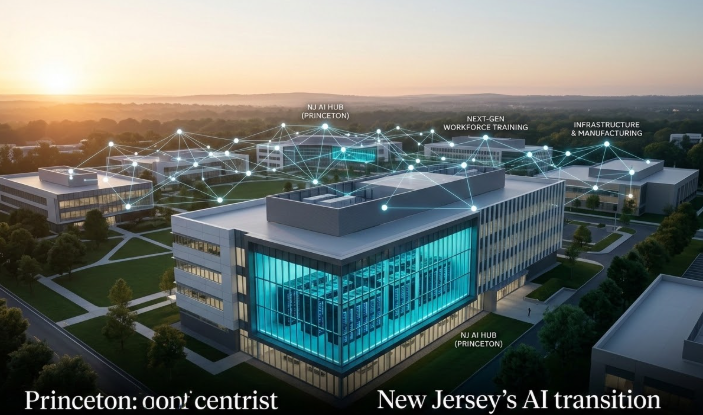
At the heart of New Jersey’s artificial intelligence ecosystem is the NJ AI Hub. Officially launched in mid-2025 and anchoring its physical footprint along the highly regarded Route 1 innovation corridor in Princeton, the Hub serves as a central nexus for entrepreneurs, researchers, and global tech conglomerates.
Born from an ambitious public-private partnership between Princeton University, the New Jersey Economic Development Authority (NJEDA), Microsoft, and CoreWeave, the initiative secured over $72 million in initial investments to champion the development of responsible, ethical AI frameworks.
The Hub is designed to counteract the siloed nature of traditional corporate research, encouraging collaborative models that bring together diverse industry minds. By acting as an incubator for early-stage startups and a testing ground for multinational pilot programs, the NJ AI Hub ensures that New Jersey remains at the absolute cutting edge of software development.
Furthermore, the Hub has already yielded profound research capabilities that extend well beyond standard data analysis. It stands as one of only two sites globally granted access to Microsoft Discovery—a cutting-edge AI platform engineered to drastically accelerate molecular modeling, materials science discoveries, and timelines for pharmaceutical drug development. For a state historically dubbed the “medicine chest of the world” due to its dense concentration of life sciences giants, this specific intersection of AI and biotechnology guarantees that New Jersey’s pharmaceutical legacy will thrive in a digital-first era.
Fueling Infrastructure and Hardware Manufacturing
Software and algorithms require massive physical computing power to exist, and New Jersey’s strategic geographic location, reliable energy infrastructure, and dense concentration of STEM talent have drawn historic capital investments from AI hardware giants. Specialized cloud infrastructure provider CoreWeave recently injected $1.2 billion into a state-of-the-art, 280,000-square-foot data center facility in Kenilworth. This massive outpost provides the heavy-duty, high-performance computing power needed to process the complex machine learning models and large language models (LLMs) used by enterprises worldwide.
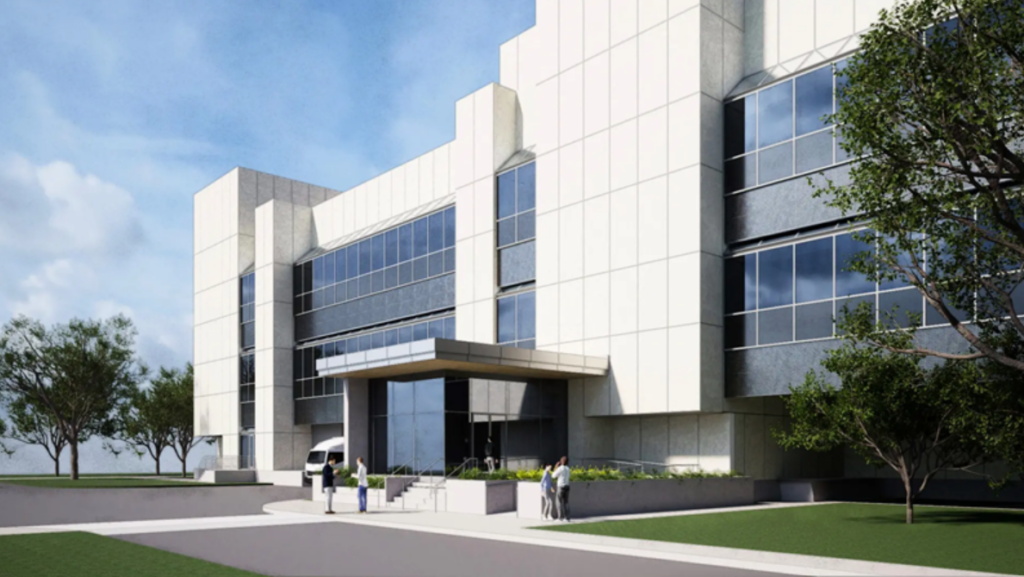
Simultaneously, the state’s traditional manufacturing sector is adapting to support this intense digital supply chain, ensuring that the physical components driving AI are also built locally. In July 2026, the NJEDA approved its very first tax credit award under the newly minted Next New Jersey Manufacturing Program for Starman New Photonics LLC. The company is directing a $150 million investment to renovate and modernize a 100,000-square-foot facility in Somerset County.
This project is anticipated to create hundreds of high-skilled manufacturing and engineering jobs dedicated entirely to producing the advanced, high-speed optical transceivers critical for linking graphics processing units (GPUs) within next-generation AI data centers. By securing this manufacturing footprint, New Jersey is cementing itself not just as a consumer or developer of AI software, but as an indispensable architect of the physical internet that powers it.
Preparing the Workforce and Combating the Literacy Gap
Rather than letting technology outpace its citizens and disrupt local labor markets, New Jersey has taken proactive, statewide policy steps to bridge the AI literacy gap. Recent regional economic data indicates that more than 25% of New Jersey’s workforce already interacts with or utilizes basic AI tools in their daily occupational routines. To scale this native capability into a specialized competitive advantage, the state has deployed comprehensive educational pathways spanning from public schools to higher education.
Among these initiatives is the Faculty Futures AI Studio, which focuses on equipping educators with the pedagogy required to teach artificial intelligence concepts effectively. Parallel to this, newly minted community college AI certification initiatives have been deployed across the state, designed specifically to upskill local workers, trade professionals, and mid-career switchers who want to transition into technical roles. Projections from state labor economists show that these targeted educational frameworks and rapid-response training programs aim to generate up to 20,000 new AI-related jobs across the state by the turn of the decade, protecting the local economy from technological displacement.
Modernizing the Public Sector and State Government
The state government is also leading by example, proving that artificial intelligence is as much an administrative asset as it is a commercial one. Following comprehensive directives and ethical guidelines put forth by the state’s Artificial Intelligence Task Force, New Jersey has systematically rolled out native generative AI strategies across its various departments.
These initiatives are designed to train state employees in safe, ethical, and secure AI use, ensuring that citizen data remains strictly protected while public services are modernized. AI applications are currently being leveraged to upgrade legacy public mainframes, streamline cumbersome bureaucratic processes, and optimize digital public services for residents. From accelerating the processing of routine state licensing applications to deploying intuitive, AI-driven portals that help residents navigate state benefits, the integration of smart tech is actively making state government more responsive, efficient, and accessible.
A Measured Approach to Sustainable Growth
As the AI boom accelerates, New Jersey is also confronting the complex regional challenges that accompany rapid technological expansion—particularly regarding energy consumption and the environmental impact of large-scale data centers. Municipalities and state regulators are actively engaged in vigorous policy debates to balance economic growth with environmental responsibility. This measured approach ensures that data center expansions do not place an undue burden on the local electrical grid or compromise the state’s aggressive clean energy goals.
By prioritizing robust physical infrastructure, localized manufacturing, and proactive workforce training alongside strict ethical guardrails, New Jersey is carving out a distinct identity in the tech landscape. The Garden State is proving that it isn’t just adapting to the artificial intelligence revolution—it is actively steering it toward a sustainable, economically inclusive future.