
New Jersey Tech, Business, & Creative Resources

The Garden State’s Digital Backbone: How New Jersey Still Connects the World

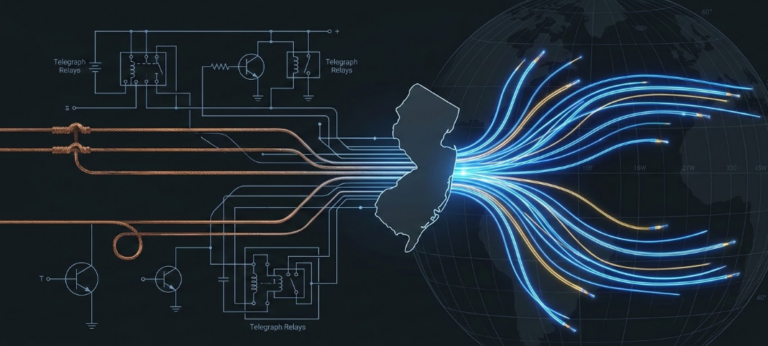
Long before smartphones and subsea fiber-optic arrays dictated the velocity of global commerce, New Jersey’s geographical positioning made it an indispensable nerve center for American telecommunications. Nestled between the massive economic engines of New York and Philadelphia, the Garden State has spent nearly two centuries acting as the physical conduit through which the world speaks.
What began in the 19th century with ironworks and single-wire telegraphs has evolved into a hyper-dense digital ecosystem. Today, New Jersey isn’t just maintaining its historical footprint; it is scaling up infrastructure to anchor the future of global connectivity, subsea transport, and artificial intelligence.
The Cradle of the Information Age
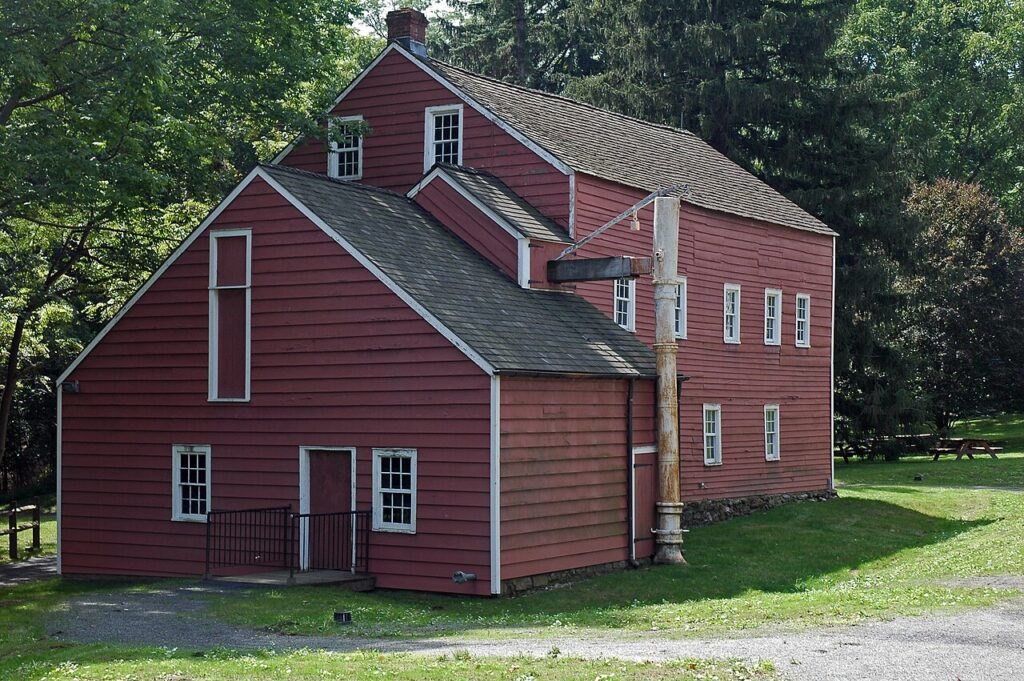
New Jersey’s telecommunications legacy began in earnest in 1838. It was at the Speedwell Iron Works in Morristown that Samuel Morse first publicly demonstrated his single-wire electric telegraph, sending a message across two miles of wire. That breakthrough laid the operational groundwork for rapid long-distance journalism, business, and governance, permanently breaking humanity’s reliance on physical couriers and rail lines.
By the late 1800s, the telephone arrived, ushering in the era of the Bell System. Established in 1877 and later dominated by AT&T, this corporate ecosystem controlled North American voice communications for over a century.
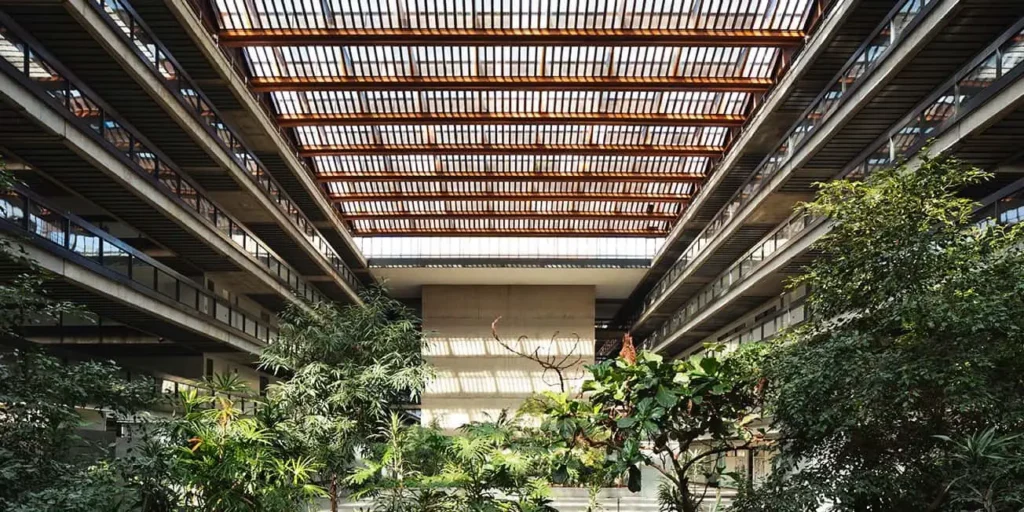
The undisputed crown jewel of this era was Bell Labs. Operating out of iconic corporate campuses in Murray Hill, Whippany, and the legendary Eero Saarinen-designed facility in Holmdel, Bell Labs earned its title as the “cradle of the modern information age.”
Researchers within these New Jersey office parks generated breakthroughs that reshaped global science and economics:
- The Transistor (1947): Invented at Bell Labs, it enabled the miniaturization of electronics, effectively spawning modern computing, the internet, and mobile devices.
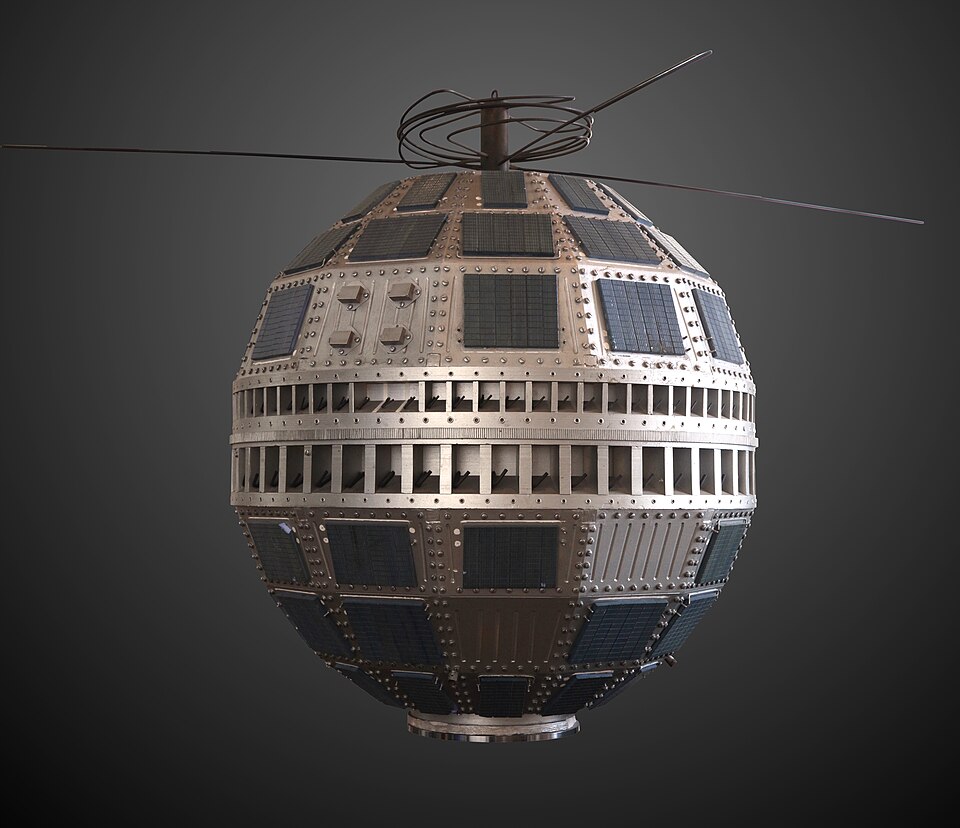
- The Telstar Satellite (1962): Developed by AT&T in tandem with NASA, this project relied heavily on New Jersey laboratory research to successfully relay the first live, public television broadcast across the Atlantic Ocean.
- Core Digital Frameworks: Innovations ranging from the laser and cellular network architecture to information theory and the UNIX operating system all trace their ancestry back to New Jersey soil.
During the height of the 20th century, AT&T and its research subsidiaries maintained a massive presence across the state, employing tens of thousands of technicians, engineers, and scientists. Entire suburban communities grew alongside these sprawling switching stations and research compounds.
When the U.S. Department of Justice forced the historic structural antitrust breakup of AT&T into independent “Baby Bells” in the 1980s, it signaled the end of a singular monopoly. However, it also triggered a wave of market competition that primed New Jersey to capture the next great leap in infrastructure: the internet.
Modern Arteries: From the Ocean Floor to the AI Cloud
While the legacy of Bell Labs remains etched in history, New Jersey’s contemporary communications infrastructure operates on a staggering physical scale. The state has shifted from the birthplace of theoretical innovation to a critical gateway for actual global data traffic.
At the center of this modern era is Wall Township, home to the New Jersey Fiber Exchange (NJFX). Operating a highly secure, 10-acre Tier 3 cable landing station (CLS) colocation campus, NJFX serves as the direct point of convergence where international subsea cables meet domestic terrestrial fiber networks.
By eliminating traditional backhaul requirements—the costly and latency-heavy necessity of routing data through legacy hubs in New York City before sending it overseas—NJFX allows global operators to interconnect directly at the cable-head. The campus hosts over 35 carriers and provides direct access to major international subsea systems:
| Subsea Cable System | Destination Routing | Operational Impact |
| HAVFRUE / AEC-2 | Links New Jersey to Denmark, Ireland, and Norway | First new subsea system connecting the U.S. to Northern Europe in nearly 20 years. |
| Seabras-1 | Direct route from Wall Township to São Paulo, Brazil | Bypasses traditional bottlenecks to provide low-latency capacity to South America. |
| TGN-Atlantic (South & North) | Connects New Jersey to high-capacity hubs in the United Kingdom | Anchors steady transatlantic financial and commercial data streams. |
This subsea density places New Jersey within immediate reach of an estimated 99.7% of global GDP.
The infrastructure continues to evolve rapidly. To meet the unprecedented compute demands of generative artificial intelligence, NJFX recently expanded its footprint by constructing a 10-megawatt, high-density AI data hall. Scheduled for completion by the end of 2026, the facility stands as North America’s first purpose-built cable landing station campus to integrate liquid-to-chip cooling infrastructure—ensuring that New Jersey remains the physical pipeline connecting international markets, automated industries, and the global cloud.